




Contact number:
+86-15692113403
-


Dr.Clear Aligner·Full‑Cycle Facial Management
Combination of Early Orthodontic Treatment and Clear Aligner Therapy
Facial Aesthetic Optimization Management
Early Screening of Skeletal and Functional Issues

What Is Full-Cycle Facial Development Management?
Whole-periodic facial development management for children and teenagers includes early maxillofacial development management and permanent dentition treatment after tooth replacement. Based on the assessment of required treatment methods, we are committed to combining functional orthodontic appliances with clear aligners, optimizing the combination of natural orthodontic forces and precision orthodontic forces, and controlling the difficulty of malocclusion at the earliest stage.

Which Oral Habits Can Contribute to Malocclusion?
-
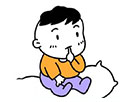

Thumb sucking
Protruded upper front teeth, deep overjet
-
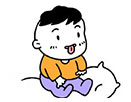
Tongue thrusting
Abnormal occlusal contact, anterior open bite
-

Mouth breathing
Narrow dental arch, protruded upper front teeth, lip incompetence
-
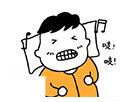
Teeth Grinding (Bruxism)
Deep overbite
-
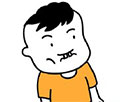
Lip biting
Biting the lower lip moves upper front teeth forward and lower front teeth lingually; biting the upper lip moves upper front teeth lingually and lower front teeth labially
-
Unilateral chewing
Facial development asymmetry

Whole-Periodic Facial Management
Accompanying Every Stage of a Child's Growth
By understanding the growth and development factors of children's teeth, facial soft tissues, and jawbones, we can make early assessments of ongoing or existing malocclusion, develop treatment plans, and ultimately guide the formation of a healthy and normal permanent dentition.
Consult Now
Dr.Clear Aligner Treatment Journey: Treatment Steps
-
01
Initial Consultation


01Initial Consultation
Contact your dentist to have dental photographs and X-rays taken and receive a digital scan or dental impression.
-
02
Dental Impressions & Orthodontic Records

02Dental Impressions & Orthodontic Records
The clinic will take dental impressions and take and keep baseline photographs of your teeth
-
03
Treatment Planning

03Treatment Planning
The doctor will create a personalized treatment plan and discuss the treatment process with you
-
04
Aligner Fabrication

04Aligner Fabrication
The lab will custom-fabricate your aligners based on your treatment plan
-
05
Wear Aligners as Scheduled

05Wear Aligners as Scheduled
Aligners should be changed every 2 weeks. Wear them for at least 22 hours a day.
-
06
Regular Follow-up Visits

06Regular Follow-up Visits
You will need follow-up visits every 6 to 8 weeks to monitor your teeth alignment progress and receive your next set of aligners
Dr.Clear Aligner FAQ
-
Q: What should I do if my child has gaps between front teeth?

A: Some parents notice gaps between their child's newly erupted central incisors, sometimes forming a "figure-eight" shape, and worry that the front teeth will not grow in properly. In fact, permanent teeth erupt at specific times and in a specific order. The upper central incisors typically erupt between ages 6 and 9, and the lateral incisors between ages 7 and 11. Therefore, in most cases, gaps between the two front teeth will appear between ages 7 and 11, and will naturally close once the lateral incisors erupt. In rare cases, the gap may be caused by a supernumerary (extra) tooth between the central incisors. This can be confirmed with an X-ray, and the extra tooth can be extracted to close the gap.
-
Q: Can canine teeth (eye teeth) be extracted?
A: During the mixed dentition phase, canines erupt later than the first premolars. Since the space in the anterior alveolar bone may already be occupied by other teeth when canines erupt, they may erupt labially, resulting in what is commonly known as "eye teeth" or "fang teeth" protruding outward. Some parents find these teeth unsightly and request extraction, which is incorrect. The canine has the longest and strongest root of all teeth and plays an irreplaceable role in tearing food. Losing it can make it difficult for children to bite into foods like sugarcane or ribs, and can affect chewing ability. If correction is needed, orthodontists typically achieve this by extracting the first or second premolars instead.
-
Q: Will there be pain or discomfort during orthodontic treatment?
A: During orthodontic treatment, children may experience brief, mild pain or discomfort in the first few days after receiving a new aligner. This is a normal physiological response as the teeth begin to move under pressure. If the pain or discomfort does not subside or disappear after one week, please contact your doctor for a follow-up examination.
-
Q: What should be noted during early orthodontic treatment?
A: If a child has respiratory or other systemic conditions, orthodontic treatment should begin only after these general and oral health issues have been resolved. In rare cases, some patients may be allergic to aligner materials. If this occurs, discontinue use immediately and consult a qualified dentist or orthodontist.
-
Q: Can I drink cold or hot beverages while wearing aligners?
A: While wearing aligners, it is not recommended to drink colored or hot beverages, mainly to prevent tooth decay and pigmentation that may affect aesthetics. Additionally, cold or hot drinks may potentially cause deformation of the aligners.
-
Q: Are there any dietary restrictions?
A: Unless otherwise specified by your doctor, there are generally no dietary restrictions. The main difference from traditional braces is that you should remove your aligners during meals.