




Contact number:
+86-15692113403
Shanghai | Cohort 1 of the Dr.Clear Masterclass on Integrated Early Orthodontic Intervention and Pediatric Dentistry Concludes Successfully
 Date:2026-03-25 16:01:38
 Author:Marketing Department
 Views:1450
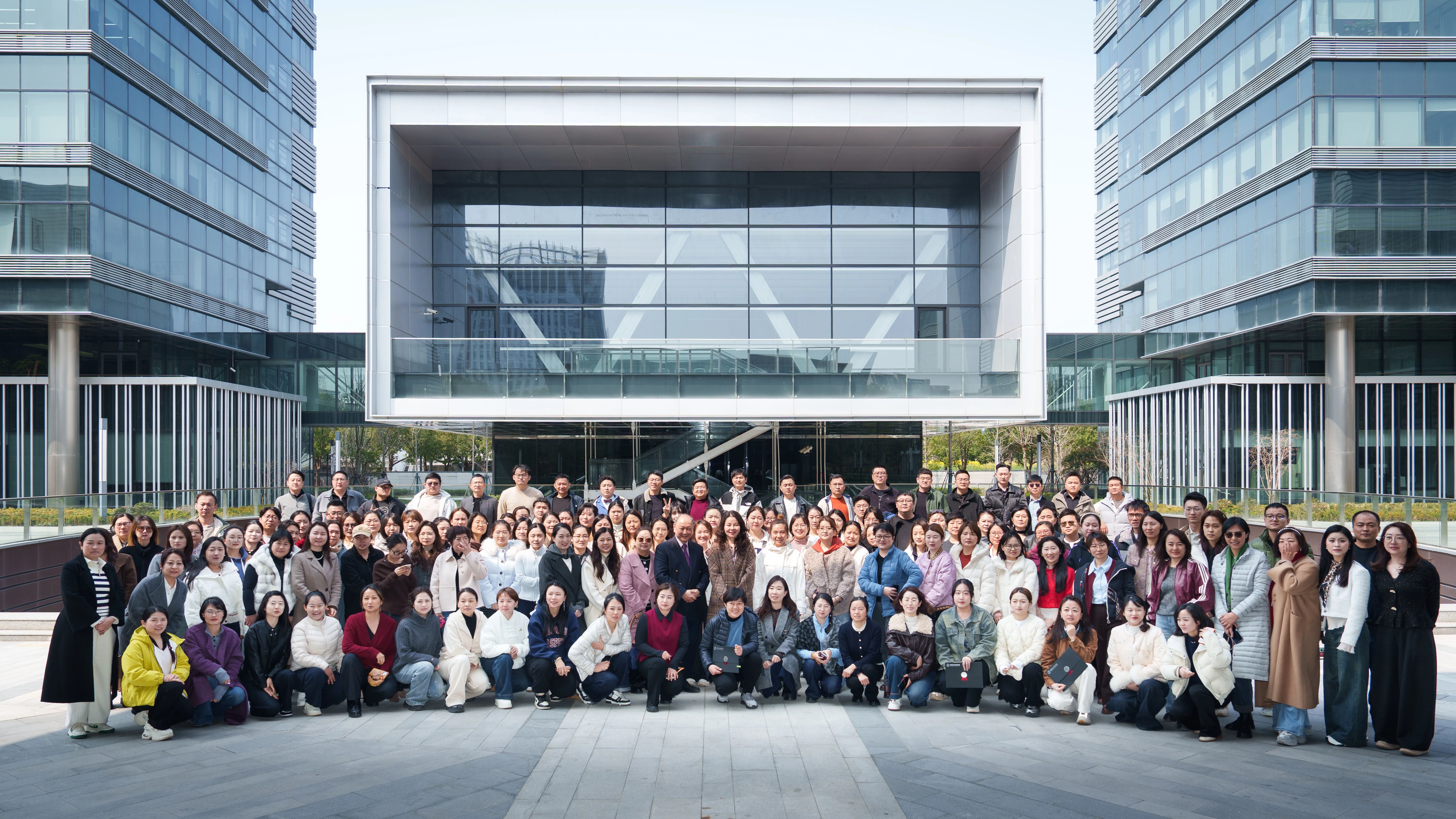
March 10-12, 2026, the "2026 Master Course Class 1 on Early Intervention & Pediatric Dentistry Joint Treatment" co-hosted by Dr.Clear Aligner, Top Education & Training Center, and Queen Mary University of London, concluded successfully in Shanghai. This was an academic handshake spanning over 8,000 kilometers, and a profound integration of pediatric dentistry and orthodontics. Over three days, two world-renowned scholars from Queen Mary University of London, one senior Chinese expert, and over a hundred domestic dental professionals collectively reshaped their thinking on early intervention in children.
Faculty: The Academic Depth of Queen Mary University of London
The academic weight of this course was anchored by the authority of its faculty. Professor Ferranti Wong (President of the European Academy of Paediatric Dentistry) and Professor Ama Johal (Lead for Orthodontics at Queen Mary University of London) — one specializing in minimally invasive pediatric treatment and developmental anomalies, the other in sleep-disordered breathing and complex malocclusion. Their 25-year collaboration brought remarkable synergy and systematic depth to their multidisciplinary lectures.
As the key Chinese speaker, Dr. Hu Fang bridged international cutting-edge concepts with Chinese clinical practice through her extensive experience and deep understanding of facial development in Asian children. Together, the three speakers formed a rare "academic golden triangle" in the field of early intervention.
Philosophy: From Traumatic Treatment to Biological Restoration
On Day 1, Professor Ferranti Wong opened new horizons with his lecture on "Minimally Invasive Pediatric Dentistry". He highlighted that with the advancement of bioactive materials, the traditional concept of "complete removal of diseased tissue" is giving way to more conservative, biologically driven treatment strategies. This is not only about preserving tooth structure, but also about children's psychological acceptance of dental care — preserving trust can sometimes hold greater long-term significance than preserving the tooth itself.
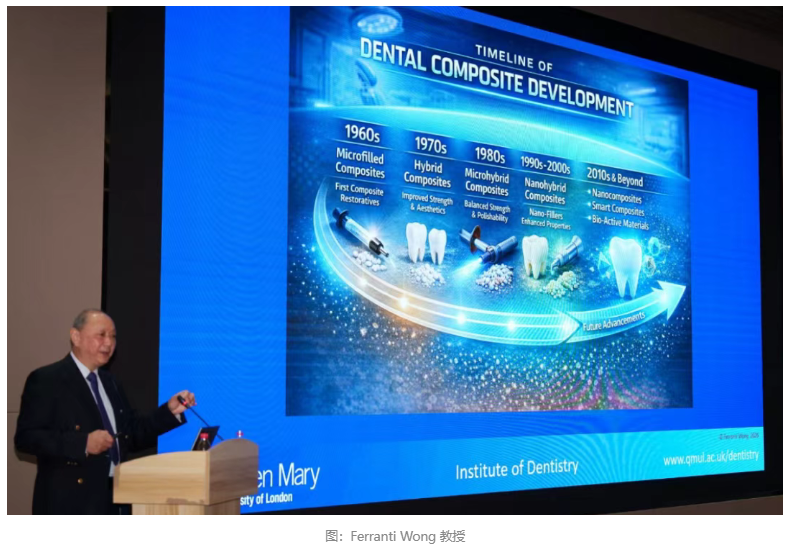
In the subsequent session on "Management of First Permanent Molar Hypomineralization", Professor Ferranti Wong systematically addressed the etiology and treatment strategies for Molar-Incisor Hypomineralization (MIH) from a pediatric dentistry perspective. He emphasized that in such cases, the timing and approach of collaboration between pediatric dentists and orthodontists often determine the ceiling of treatment outcomes.
The afternoon keynote further integrated theory and practice. From the management of supernumerary and impacted teeth to a full demonstration of autotransplantation, Professor Ferranti Wong showcased how to achieve "resource recycling" of teeth in growing children. Teeth once destined for extraction can gain a second life through systematic multidisciplinary intervention.
Dimension: A Systemic View from Sleep Breathing to Facial Development
If Day 1 focused on tooth restoration, Day 2 elevated the perspective to the systemic level of children's growth and development. Professor Ama Johal's lecture on "Sleep-Related Breathing Intervention" revealed the critical role of orthodontics in treating pediatric Sleep-Disordered Breathing (SDB). Grounded in evidence-based medicine, he systematically explained the mechanisms and clinical evidence for Rapid Maxillary Expansion, Functional Orthodontic Appliances, and Mandibular Advancement Devices. For orthodontists, this represents not only an expansion of technical boundaries but a redefinition of treatment value — improving the airway can sometimes influence a child's developmental trajectory more than aligning teeth.
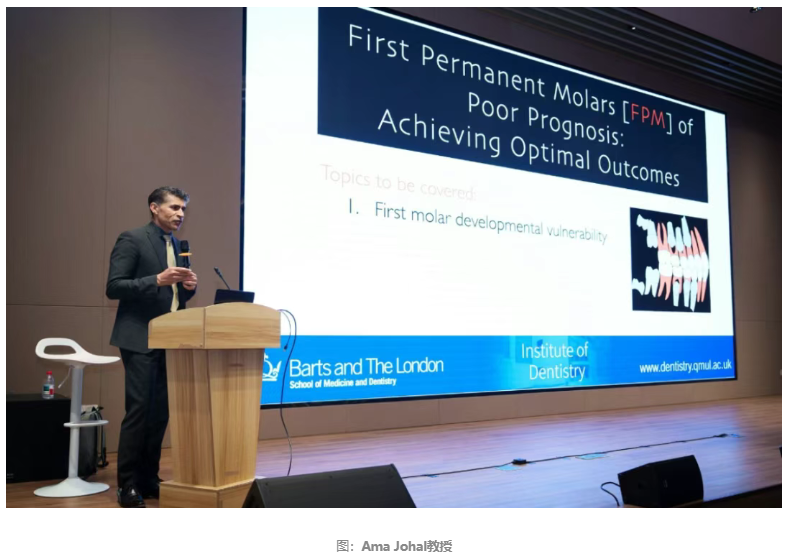
Addressing the orthodontic management of early loss of first permanent molars, Professor Johal used interactive case discussions to explore the timing of extraction for poor-prognosis molars, space management, and long-term planning with participants. Seemingly isolated first molar issues revealed a complete treatment logic chain when viewed through the combined lens of orthodontics and pediatric dentistry.
The afternoon sessions focused on the systematic management of various Angle's malocclusions. Whether addressing supernumerary teeth, eruption disorders, or midline diastema, Professor Johal consistently emphasized a core principle: the value of diagnosis is no less than treatment; the timing of collaboration determines the final outcome.
Dr. Hu Fang's Three-Dimensional Diagnosis and Growth Management
On Day 3, Dr. Hu Fang's two lectures served as the crucial link between international concepts and Chinese clinical practice. In her session on "Systematic Treatment of Expansion and Class III Malocclusion", she clearly stated that Class III treatment is not a mechanical combination of "expansion + protraction facemask," but a strategic game racing against growth and development. She systematically outlined the indications for different types of expansion and emphasized the fundamental biomechanical differences between high-angle and low-angle cases — the former requires caution against clockwise mandibular rotation, while the latter should leverage vertical control through intermaxillary elastics.
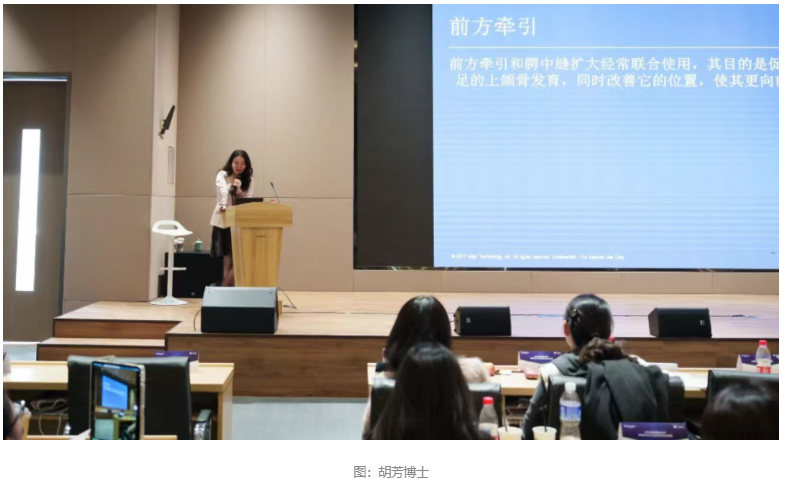
The afternoon lecture on "Correction of Facial Asymmetry in Children and Adolescents" delved into deeper dimensions. Dr. Hu Fang proposed that the diagnostic starting point for facial asymmetry is to strictly differentiate between functional and skeletal deviations, establishing a three-dimensional diagnostic framework: locating the skeletal source of deviation in the transverse plane, identifying alveolar bone height discrepancies in the vertical plane, and assessing mandibular position in the sagittal plane. Through compelling cases, she demonstrated how targeted intrusion can achieve chin rotation, rather than simply chasing midline alignment.
Dialogue: A Quarter Century of Collaboration and Legacy
During the interactive seminar on Day 3, Professor Ferranti Wong and Professor Ama Johal took the stage together, sharing insights from their quarter-century collaboration through case discussions. From mild enamel hypoplasia to severe anomalies in tooth number and morphology, each case clearly illustrated the intervention points and division of responsibilities between pediatric dentists and orthodontists at different stages.
This is not a simple stacking of techniques, but a true integration of disciplines. The pediatric dentist handles etiological diagnosis and basic maintenance, the orthodontist leads mechanical control and occlusal reconstruction, and surgery intervenes when needed to resolve structural obstacles — this trinity of treatment models gave participants a direct experience of the "begin with the end in mind" treatment philosophy.
Moving Forward: Dr.Clear Aligner's Role as an Academic Connector
The success of this Master Course marks Dr.Clear Aligner's continued deepening of its role as an academic connector. By partnering with world-class institutions like Queen Mary University of London to bring courses of genuine academic depth and clinical value to China, Dr.Clear Aligner is building an academic bridge across borders.
For every participant, the three-day program is not an endpoint but a new beginning. When they return to their clinics and face the children waiting for help, the dual perspectives from London and Shanghai will become the most powerful tools in their hands.
Helping children fall in love with their smiles — Dr.Clear Aligner is on this journey together with every doctor.
Recommended Articles
- Shanghai | Cohort 1 of the Dr.Clear Masterclass on Integrated Early Orthodontic Intervention and Pediatric Dentistry Concludes Successfully
- Dr.Clear Aligner and Korea's Graphy Enter into an Exclusive Strategic Partnership in China
- Dr.Clear Aligner 2025 Mid-Year Review: Defining Future Precision with Chinese Wisdom!
- Wuhan | Dr.Clear Aligner & Hongchang Dental Summer Pediatric Early Orthodontic Treatment Dual-Track Training Program for Clinicians and Patients Concludes Successfully
- Technology for Good: The “Silver Smile · Seedling Dental Care” Community Outreach Initiative Launches
- “Journey Together, Protecting Little Smiles” – Dr. Eggshell Pediatric Dental & Dr.Clear Aligner Study Tour Season 3 Successfully Concluded~
- Shanghai | Dr.Clear GroForce Class II-III Solution Seminar Successfully Concluded!
- Focusing on a Digital Future: Dr.Clear Aligner and Industry Leaders Discuss New Opportunities in Orthodontics
- Henan | Luoyang Danke Children's Dental Digital Children's Whole-Periodic Facial Management Center Officially Established!
- Beijing | Dr.Clear Children's Whole-Period Early Orthodontic Treatment Roadshow and Summit Concluded Successfully